

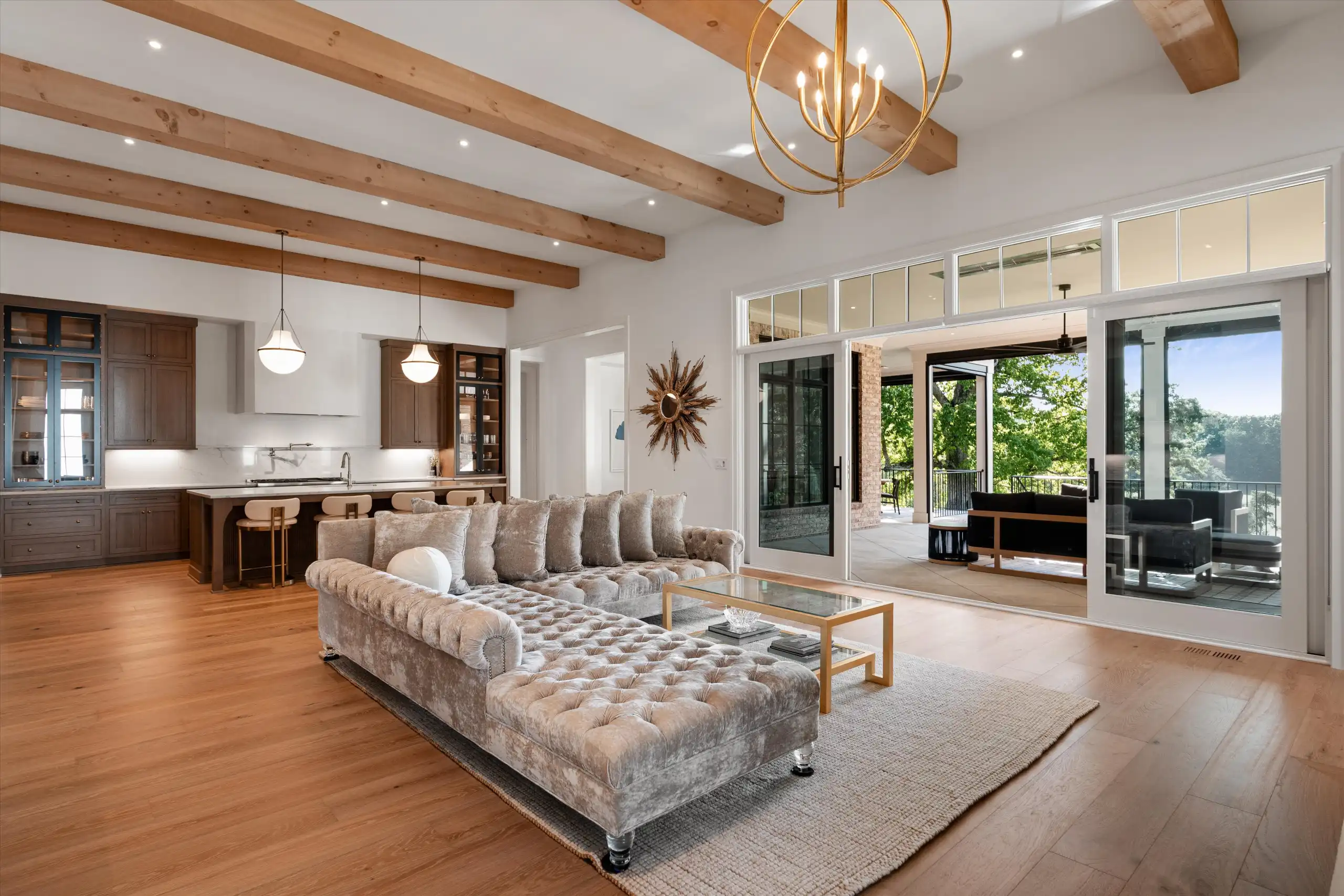
In Nashville’s high-value residential market, price is not proof of construction quality. A premium price may reflect land position, school zoning, architectural presentation, scarcity, or buyer demand. It may also reflect durable construction, disciplined maintenance, and well-documented systems. The distinction matters because the buyer inherits the house after the marketing has ended.
For clients evaluating a well-built home vs expensive home in Nashville, the correct question is not whether the property presents well. The better question is whether the construction, systems, envelope, and maintenance history support the price being asked. That requires a diligence process calibrated to the asset, not a standard inspection treated as a formality.
Price Versus Execution Quality
Key observation: price often measures demand before it measures construction
In Belle Meade, Green Hills, Forest Hills, Oak Hill, Historic Belmont, and North Franklin, a high price can be driven by site quality, lot size, privacy, proximity, architectural scarcity, or replacement-cost pressure. Those factors may justify value. They do not confirm execution quality.
Premium finishes can also distort judgment. Stone counters, custom lighting, imported hardware, and fresh interior surfaces can create confidence while concealing ordinary framing, limited mechanical capacity, weak drainage design, or prior-owner maintenance gaps. A property can be expensive, attractive, and still operationally fragile.
A well-built residence usually shows evidence beyond presentation. That evidence may include coherent design documents, consistent permit history, reputable trade execution, properly sized mechanical systems, drainage that performs under weather stress, durable exterior envelope detailing, and maintenance records that show stewardship rather than reaction.
Builder reputation is relevant, but not conclusive
Builder reputation can materially reduce risk, particularly when the builder has a documented history of quality-control discipline, stable subcontractor relationships, and accountability after delivery. It should not replace independent verification. Even strong builders can have uneven execution across eras, site conditions, project managers, and owner-driven changes.
The more customized the residence, the more important the as-built condition becomes. Specialty materials, complex rooflines, large window systems, conditioned crawlspaces, integrated technology, pool systems, elevators, generators, and extensive hardscape all introduce additional failure points. Price may capture their appeal. It may not capture their remaining service life.
Maintenance history is often more revealing than staging
Maintenance records are a useful test of ownership discipline. Service logs, repair invoices, warranty files, roof records, HVAC maintenance contracts, generator service reports, waterproofing documentation, pest treatment history, and prior inspection reports can expose patterns that listing photography cannot.
Absence of records does not prove neglect. It does increase uncertainty. In that case, the buyer should assume a broader diligence burden and price the risk accordingly. A seller who can provide clean, chronological records has a stronger position. A seller who cannot may still have a good asset, but the buyer should not pay as though the record is complete.
Systems and Structural Due Diligence Scope
Standard inspection is a baseline, not a full risk audit
The ASHI Standards of Practice provide a useful baseline for understanding conventional inspection scope. They are not a substitute for targeted specialist review on a high-value residence with substantial systems exposure. The inspection plan should scale with age, complexity, construction type, site conditions, and total financial exposure.
The relevant question is whether the proposed diligence scope is proportionate to the downside. A broader inspection process increases upfront cost and may lengthen the contingency period. That trade-off is often justified when the alternative is discovering structural, water intrusion, or mechanical defects after closing, during occupancy, or under major weather conditions.
Priority risk areas
Structural review should address foundation movement, framing irregularities, load paths, settlement indicators, retaining walls, additions, and prior modifications. This is particularly important where renovations have altered openings, roof loads, finished basements, garages, or outdoor living areas.
Envelope review should address roof assemblies, flashing, window installation, drainage plane continuity, stucco or masonry transitions, crawlspace conditions, grading, gutters, downspouts, and moisture management. Hidden envelope defects can remain quiet during a showing and surface only after sustained rain, freeze-thaw conditions, or seasonal humidity shifts.
Mechanical review should address HVAC age, sizing, zoning, duct design, ventilation, dehumidification, water heater capacity, electrical panel condition, generator integration, pool equipment, irrigation controls, and smart-home dependencies. Premium finishes do not offset systems installed to minimum code or systems approaching the end of useful life.
Electrical and life-safety review should confirm panel capacity, visible workmanship, grounding, GFCI and AFCI protection where applicable, smoke and carbon monoxide protection, exterior power exposure, and the quality of any remodel-era electrical work. Where code questions arise, the appropriate reference point may include the International Residential Code, local amendments, permit records, and licensed specialist input.
Verification items before relying on conclusions
Several items require verification before a buyer should draw firm conclusions. First, local building code amendments and enforcement history should be checked for the relevant construction era and jurisdiction. Second, permit and inspection records should be requested and compared against visible work. Third, inspectors and engineers should be selected based on credentials and comparable case experience with Nashville high-value housing stock, not convenience alone.
For older residences, the objective is not to force the property into new-construction expectations. The objective is to distinguish age-appropriate condition from concealed deterioration, improper alteration, or deferred maintenance that materially changes ownership risk.
Risks and Trade-Offs
Hidden defects can change the economics after closing
The primary downside is not cosmetic disappointment. It is post-acquisition exposure that changes the economic basis of ownership. Water intrusion, foundation movement, failing roof assemblies, undersized HVAC, obsolete electrical work, drainage failure, and poor remodel execution can create repair costs, occupancy disruption, insurance complications, and future resale objections.
There is also appraisal vulnerability. If the price is supported heavily by presentation and location but the property carries unaddressed systems risk, a lender or future buyer may view value differently. An Appraisal-Ready Dossier can help organize relevant construction, maintenance, and improvement documentation when quality is real and provable.
Negotiation should separate price issues from asset-selection issues
Not every defect requires walking away. Some issues are quantifiable and can be addressed through price concessions, seller repairs, escrow structures where appropriate, or a revised closing timeline. Other issues indicate a pattern of poor execution or uncertain future exposure. In those cases, the better decision may be to pursue a lower-risk alternative asset.
The decision should not be emotional. It should map each deficiency against likely repair range, urgency, effect on functional life, resale relevance, and disruption to planned occupancy. Known issues can be negotiated. Unknown systems risk should be contained or avoided.
Recommended Path
Use a disciplined diligence sequence
The recommended path is a phased Structural & Systems Due Diligence process. Patti should coordinate the overall strategy and communication. The buyer should authorize inspection depth consistent with the asset’s value and complexity. The inspector should complete the baseline review. Specialists should be engaged for structural, HVAC, roofing, envelope, electrical, drainage, pool, and other relevant systems as indicated. Counsel should advise on contract rights, notices, deadlines, and any repair or credit structure.
Where the property has complex history, a Forensic Risk Audit may be appropriate. That review should include permit research, prior listing history where available, improvement documentation, seller disclosures, maintenance records, contractor invoices, and specialist reports. The purpose is not to create delay. The purpose is to prevent the buyer from substituting assumptions for evidence.
Decision structure for the buyer
The buyer should receive a concise risk matrix before the inspection contingency decision. Each item should be classified as immediate safety concern, near-term capital expense, routine maintenance, documentation gap, or resale-relevant defect. Each item should have an owner, a proposed next step, and a decision deadline.
Patti’s role is Single-Point Coordination. That includes sequencing the diligence team, filtering findings, separating material risk from noise, preparing negotiation options, and maintaining communication discipline with the seller’s side. The client’s role is to decide risk tolerance once the evidence is organized. The specialists’ role is to define condition and likely corrective pathways within their licensed scope.
Next Action
Before advancing on a high-value Nashville residence, the buyer should approve a diligence plan tied to the specific property, not a generic checklist. Owner: Patti to prepare the diligence sequence and recommended specialist roster. Owner: buyer or family office representative to confirm budget, timing tolerance, and acceptable risk threshold. Owner: inspectors and engineers to verify condition, document uncertainty, and identify further testing where needed. Owner: counsel to manage contractual rights and contingency deadlines.
A well-built home can justify a premium. An expensive home merely proves that the market assigned it a high price. The difference should be established through documentation, specialist review, and disciplined negotiation before the buyer accepts the risk of ownership.
Whether you have questions about this topic or any other real estate matter, Patricia Straus is here to help. Feel free to call or email anytime for expert guidance, local market insight, and personalized assistance with all your real estate needs.